In early America, poor houses, or almshouses, were institutions designed to provide refuge for the destitute, a reflection of societal values towards poverty and communal responsibility. These structures held stories of resilience amidst colonial hardship, often serving vulnerable populations such as the elderly and orphans. Understanding the role of poor houses invites us to reflect on contemporary issues surrounding poverty and welfare, emphasizing how historical challenges shape our current social safety nets. Delving into these tales broadens our perspective on compassion and community, urging us to consider how we can contribute to solutions for today’s struggles. Join us as we explore the essential role of poor houses in American history, revealing lessons that resonate with the ongoing pursuit of financial security and collective well-being.
What Were Poor Houses? Understanding Their Purpose
In early America, poor houses emerged as a critical response to the growing needs of vulnerable populations, particularly during times of economic hardship. These institutions were designed to provide shelter, food, and basic care to individuals and families who had fallen on hard times, essentially serving as a safety net for those unable to support themselves. The very existence of poor houses reflects a society grappling with issues of poverty, social responsibility, and the welfare of its citizens.
Poor houses were established primarily in the 17th and 18th centuries as communities realized that a significant number of their residents were struggling with extreme poverty due to various factors, including war, economic instability, and natural disasters. While intended to offer assistance, these institutions often operated under strict rules aimed at discouraging dependency. Residents were typically required to contribute to the upkeep of the facility or engage in labor, reinforcing the ethos that aid was conditional on personal effort and working towards self-sufficiency.
Sterling examples from the historical landscape illustrate the complexities of poor houses. Some inhabitants found a temporary refuge, but many endured strict discipline and indignities that revealed the era’s prevailing attitudes toward poverty. The conditions often mirrored the views of society, which saw poverty not merely as a social failing but as a result of personal shortcomings. This perception created an environment where poor houses became associated with shame and stigma, rather than compassion and support.
Understanding the purpose of poor houses in early America also highlights crucial lessons for contemporary society. As we grapple with modern poverty and welfare systems, reflecting on the evolution of support structures-beginning with poor houses-provides insight into the importance of balancing assistance with empowerment. In today’s world, solutions should not only address immediate needs but also promote personal growth, resilience, and the potential for individuals to thrive, further emphasizing the value of supportive communities in combating poverty.
A Brief History of Poor Houses in Early America
In the landscape of early America, poor houses became vital establishments as communities sought to address the complex needs of those facing extreme financial hardship. Originating in the 17th and 18th centuries, these institutions were born out of necessity, driven by the recognition that many individuals and families were struggling due to a myriad of challenges-ranging from economic instability and unemployment to the aftermath of wars and natural disasters. Poor houses were intended to serve as a form of societal safety net, providing food, shelter, and basic care to those unable to fend for themselves.
However, these establishments were often far from ideal. To curb dependency and encourage self-sufficiency, strict rules governed life within poor houses. Residents were frequently required to engage in labor to help maintain the facility, reinforcing the belief that any form of aid should be earned rather than given freely. This mentality reflected broader societal attitudes towards poverty, which were often rooted in the notion that poverty arose from personal failings. Consequently, the environment within poor houses could be harsh; residents faced strict discipline, and many reported experiences of humiliation and stigma, shaping the narrative around poverty as one of blame rather than compassion.
The establishment of poor houses not only addressed the immediate needs of individuals but also revealed a growing awareness among communities about the social responsibilities they bore. Instances of colonial hardships prompted towns and localities to explore more structured approaches to caring for the vulnerable. Over time, poor houses evolved into complex institutions, reflecting the interplay between societal values and economic realities. They serve as a historical example of how societies navigate difficult economic landscapes, balancing compassion with the drive for personal accountability.
Reflecting on this legacy today, there are valuable lessons to be learned from the operation and philosophy of poor houses. As modern communities grapple with poverty and welfare systems, it is important to consider how support structures can empower individuals while providing necessary assistance. Understanding the past encourages a more holistic view of social welfare, one that integrates compassion with strategies aimed at fostering resilience and independence among those who seek help. By doing so, we honor the struggles of the past while creating pathways for more effective and supportive systems today.
Life Inside Poor Houses: Struggles and Survival

Despite the societal label as a safety net for the vulnerable, life inside poor houses could be an arduous existence marked by strict rules and limited resources. These institutions were designed to provide basic needs such as food, shelter, and medical care, yet they often fell short of offering true comfort and dignity. Residents faced a daily struggle not just for physical sustenance but for emotional and social validation in an environment that frequently stigmatized them.
Daily Life and Responsibilities
Life within a poor house largely revolved around maintaining the facility itself, with residents often required to participate in laborious tasks. Most were expected to assist with cooking, cleaning, and tending to the grounds as a means of earning their keep. This labor was justified by the prevailing belief that aid should not be given freely but earned through work, instilling a sense of obligation that could feel demeaning. For many, particularly families with children, this dynamic created a conflicting sense of responsibility and shame, complicating their experiences and relationships with one another.
In addition to physical labor, the daily routines in poor houses were rigid and often devoid of personal freedom. Meals were shared communally at set times, typically offering basic fare-often bland and repetitive. Privacy was minimal, and social interactions could be tense, as residents grappled with their circumstances alongside those often facing similar or worse predicaments. The stark reality was that within these walls, individuals lost not just their homes but also much of what constituted their identities, dignity, and community.
Social Dynamics and Emotional Toll
Emotional struggles were an intrinsic part of life inside poor houses. The overwhelming sense of stigma related to poverty led many residents to feel isolated, not just from the broader community but even from one another. Residents frequently lived under the weight of the judgment from those who perceived poor houses as places of moral failing rather than sites of survival and resilience. Sometimes, conflicts arose, spurred by competition for resources, differing strategies for coping, or parental responsibilities weighing heavily on families.
Despite these challenges, stories of camaraderie and support emerged. Residents occasionally banded together to share strategies for dealing with their situation, whether through resource-sharing or emotional support. These moments of connection provided a vital lifeline, fostering a sense of community-however tenuous it may have seemed-in a place meant to provision safety.
Recognizing the tenacity and creativity seen among residents offers important insights into cultivating resilience in one’s situation today. Those who found ways to create small pockets of joy and inspiration within the confines of their struggles serve as historical reminders that even amid hardship, the spirit can persevere. Engaging with their stories invites a more profound understanding of poverty-not just as a social issue, but as a human experience marked by survival, creativity, and hope.
Ultimately, the lessons gleaned from life within poor houses extend beyond their physical walls, urging current systems to consider empathy and support as critical components of social safety nets.
The Impact of Colonial Hardships on Communities
Colonial America faced a myriad of hardships that fundamentally influenced community structures and social services. Early settlers contended with harsh climates, limited resources, and frequent conflicts with Indigenous peoples. The struggle for basic survival forged a communal spirit, yet it also led to the reliance on systems like poor houses, which emerged as vital support structures for those unable to provide for themselves. The pressure of these circumstances catalyzed a shift in how communities cared for their most vulnerable members.
In times of drought, famine, or disease, families found themselves overwhelmed, leading to economic instability and increased reliance on communal aid. As people faced insolvency due to crop failures or the aftereffects of war, the threat of poverty loomed large. Communities began to recognize that collective support could provide a safety net. This sowed the seeds for the poor house system, which represented both a practical solution to aid those in need and a reaction to moral and ethical imperatives to assist the less fortunate.
The establishment of poor houses often reflected the prevailing attitudes towards poverty. Many viewed the residents as victims of circumstance rather than moral failures, fostering a sense of compassion that could lead to community initiatives. However, as these institutions developed, they often did so under rigid regulations and expectations, requiring residents to work in exchange for their keep. This structured approach to aid created a paradox wherein individuals sought assistance yet found themselves further marginalized by societal values that stigmatized poverty.
As we reflect on these historical hardships, the stories from this period underscore the resilience inherent in human communities. Today, as modern social services evolve, we can draw parallels to those past experiences. The necessity of support systems and community involvement remains fundamental, urging us to cultivate empathy and understanding toward those facing economic struggles. By recognizing the legacy of colonial hardships in shaping social care, we can inspire a renewed commitment to ensuring no one is left behind in today’s society. Embracing a spirit of support and activism not only honors history but also empowers us to create lasting change.
Comparing Poor Houses to Modern Social Welfare
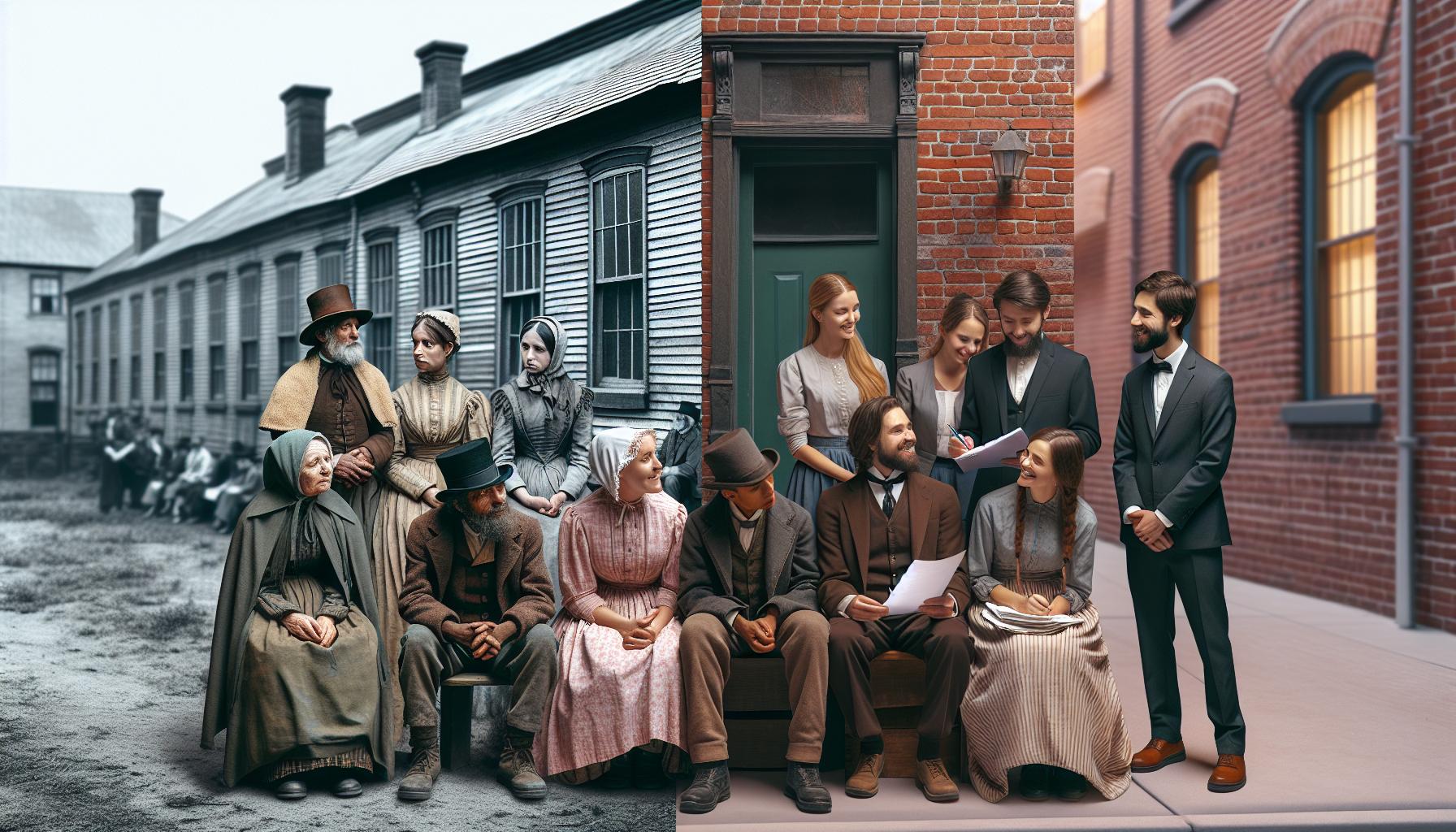
In exploring the legacy of poor houses in early America, one cannot help but notice the parallels with modern social welfare systems. Poor houses served as a response to acute social needs, much like today’s network of social services designed to assist those facing economic hardships. These institutions not only provided shelter but also emphasized communal responsibility. By examining these historical foundations, we can find essential lessons to guide contemporary welfare policies and community support systems.
Today, social welfare encompasses a variety of programs aimed at alleviating poverty, providing access to healthcare, and supporting education. This multi-faceted approach reflects a more nuanced understanding of the complexities of poverty compared to the rigid frameworks of poor houses, where residents often faced strict regulations and stigma. Modern welfare initiatives prioritize individual dignity and agency, focusing on empowering people to improve their situations rather than merely providing basic sustenance.
However, some challenges persist in contemporary systems that echo those seen in poor houses. For instance, individuals seeking assistance may still confront bureaucratic hurdles that complicate access to benefits. A renewed focus on streamlining applications and providing comprehensive support can enhance the effectiveness of these programs. Moreover, fostering a sense of community involvement can help reduce the stigma associated with needing aid, much like the original intentions behind poor houses.
Lastly, the economic context has shifted dramatically. While poor houses emerged during colonial struggles with limited resources, today’s welfare systems operate within a global economy characterized by both wealth and inequality. Strategies such as cooperative housing models, community gardens, and local entrepreneurship can revive the spirit of communal support seen in earlier times. By embracing innovative solutions alongside traditional welfare models, we can build a more inclusive society that honors the resilience of its members while addressing the complexities of modern economic challenges.
Misconceptions About Poor Houses in History

In the popular imagination, poor houses during the colonial era are often viewed through a lens of stigma and despair, shrouded in misconceptions that paint an incomplete picture of their purpose and function. Contrary to the notion that these institutions were mere warehouses for the destitute, poor houses were complex social constructs designed to provide critical support to individuals facing dire circumstances. They were more than just places of last resort; they represented a community’s-even a society’s-commitment to care for its most vulnerable members.
One prevalent misconception is that the residents of poor houses were exclusively ‘lazy’ or ‘undeserving’ individuals seeking a free ride. In truth, many residents were victims of circumstances beyond their control, such as economic downturns, disease outbreaks, or natural disasters. In fact, poor houses often housed families, children, and the elderly who simply needed temporary refuge and assistance to regain their footing. The community’s role in supporting these individuals highlights the collaborative spirit aimed at providing security and sustenance during challenging times.
Furthermore, there is a belief that life in poor houses was uniformly grim and devoid of dignity. However, many establishments strived to create a semblance of normalcy and community. Activities often included workshops that taught skills to encourage self-sufficiency, communal meals that fostered connection among residents, and even spiritual teachings through religious services. These elements offered a sense of hope and purpose, aiming to uplift rather than simply contain.
While the prevailing image of poor houses may still evoke feelings of shame or neglect, acknowledging their diverse realities offers valuable lessons for today’s welfare systems. Just as poor houses evolved in response to the needs of their populations, modern social services can benefit from an understanding of complex human experiences and the importance of compassionate care. By fostering an empathetic perspective on those in need, communities can work towards building inclusive systems that empower individuals to thrive, rather than merely survive.
Personal Stories: Tales from Residents of Poor Houses

In the shadows of colonial America, where burgeoning towns were often juxtaposed with poverty and desperation, the personal stories of poor house residents reveal the complexities of life within these institutions. Rather than simply representing failure or lack, these narratives often reflect resilience, community, and necessity. For many, the poor house was not merely a place to reside but a temporary refuge offering a chance at recovery during times of distress.
Take, for instance, the tale of Elizabeth, a widow with three young children. After the unexpected death of her husband during a harsh winter, Elizabeth had no choice but to seek shelter in the local poor house. Rather than succumbing to despair, she embraced the community spirit of the institution. Elizabeth participated in communal activities, learning sewing skills that not only helped her support her family but also fostered friendships among other residents. Through her determination, she transformed her stay into a stepping stone toward regaining her independence.
Another poignant story comes from Jacob, an elderly craftsman who found himself in the poor house after a debilitating illness left him unable to work. Initially overwhelmed by the stigma attached to his situation, Jacob discovered a nurturing community of fellow artisans and laborers. Sharing his woodworking skills with younger residents, he found renewed purpose in mentoring others. His story celebrates the human ability to adapt and find meaning, showcasing how the poor house became a space for intergenerational support and learning.
These narratives highlight a crucial aspect of poor houses that is often overlooked: the sense of community they fostered. With shared meals and collaborative activities, residents not only survived but often thrived through the bonds forged in their shared circumstances. The sense of dignity and hope cultivated within these walls serves as a reminder of human tenacity in the face of hardship. Each story is a testament to the spirit of survival, turning the poor house into a cradle of resilience rather than simply a shelter of last resort.
As we reflect on these experiences, it’s essential to carry forward the lessons learned from such histories. Understanding the depth of these personal stories reinforces the importance of compassion, community, and collective support-values that resonate deeply in today’s society as we navigate our own challenges.
The Role of Religion in Early American Poor Houses
In early America, the establishment of poor houses was deeply intertwined with the religious beliefs and practices of the time. Many communities saw it as a moral imperative to care for the less fortunate, a calling rooted in Christian teachings that emphasized compassion and charity. This religious motivation not only influenced the founding of these institutions but also dictated their operations, fostering an environment where faith and support were interwoven.
Religious organizations often played a central role in the administration of poor houses. Churches provided funding, volunteers, and spiritual guidance, believing that caring for the needy was a reflection of their religious values. They promoted the idea that individuals facing hardship were deserving of compassion, not scorn. This perspective contributed to the creation of a supportive community atmosphere within poor houses, where prayer and religious teachings were integral components of daily life. Residents often participated in communal worship services, which not only offered spiritual solace but also strengthened their sense of belonging and community.
Moreover, the intertwining of religion and charity led to the establishment of various programs aimed at uplifting residents. Many poor houses organized educational opportunities, teaching practical skills alongside moral lessons. Residents could engage in workshops that addressed both their physical needs and their spiritual growth, focusing on themes of resilience and hope. Such programs aimed to prepare individuals for a return to self-sufficiency, reflecting the era’s belief in redemption and personal responsibility through divine support.
Overall, provided not just a safety net for the struggling but also a framework for fostering resilience and hope. By addressing both material needs and spiritual well-being, these institutions can be seen as early examples of holistic approaches to social welfare-an endeavor that resonates even in contemporary discussions about community support and compassion. Emphasizing shared values of love, charity, and stewardship lays a foundation for addressing modern challenges, encouraging us to uplift one another in our journeys toward a sustainable and fulfilling life.
Economic Factors Leading to the Establishment of Poor Houses
In the challenging landscape of early America, economic factors played a crucial role in the establishment of poor houses. As communities expanded and industrialization began to take root, populations swelled, leading to increased instances of poverty and hardship. Natural disasters, poor harvests, and economic downturns did not merely affect individual families but reverberated through entire communities, leaving many vulnerable and in need of support. Historical records show that as unemployment rose and families lost their financial footing, towns recognized an urgent need to provide shelter and resources for their destitute members.
The rise of wage labor in burgeoning cities also contributed significantly to the establishment of these institutions. Many laborers, often with little job security, faced chronic instability. Workers in industries such as textiles and agriculture found themselves reliant on seasonal employment, leaving them susceptible to cycles of poverty, especially during economic downturns. This reality prompted local governments and communities to set up poor houses to ensure that those unable to find work or support could find refuge and assistance. The operational costs and demands placed on families due to the significant number of school-age children and elderly members further emphasized the necessity of creating spaces where vulnerable populations could be cared for without overwhelming individual households.
Aligning with these economic shifts, the necessity for collective action became palpable. Communities understood that by pooling resources to construct poor houses, they could provide a safety net that not only addressed immediate needs but also bolstered the local economy. Poor houses offered work opportunities for those who could contribute, enabling residents to engage in productive tasks while starting their path toward self-sufficiency. This model of shared resources reflects a foundational belief in community resilience-a precursor to modern social welfare systems that still seek to balance assistance with empowerment.
In understanding these economic drivers, we gain valuable insights into the complexities of human needs and community responses. Historical lessons guide us today, highlighting the importance of both structural support and individual empowerment in navigating financial challenges. As we reflect on these early institutions, let us draw inspiration from their legacy, using it to inform our contemporary discussions around social support and economic resilience, ensuring that we build inclusive communities where everyone has the opportunity to thrive.
How Poor Houses Addressed Family and Child Needs
In an era marked by economic turmoil and unstable family structures, poor houses emerged as essential lifelines for families and children grappling with distressing circumstances. Designed to provide shelter, food, and basic care, these institutions did not merely address the immediate needs of the impoverished but also sought to create an environment where family units could remain intact during dire times. The understanding that family stability is critical to child development led to innovative practices within poor houses that focused on preserving familial connections and nurturing young ones.
The approach taken by poor houses often included organized educational and vocational programs aimed at children and parents alike. For instance, many establishments incorporated basic schooling for children, ensuring that even the most disadvantaged youth had the opportunity to learn essential skills that could facilitate their future independence. This focus on education was complemented by opportunities for apprenticeships or domestic training for older children, fostering a sense of responsibility and the groundwork for self-sufficient futures. By ensuring that children remained engaged and learning, poor houses recognized the importance of shaping resilient individuals who could contribute positively to society.
Moreover, poor houses facilitated community connections that often extended beyond their walls. Families received not only the resources they needed to survive but also emotional support through structured group activities. The communal environment helped combat the feelings of isolation that often accompanied poverty, enabling families to forge valuable relationships with others facing similar hardships. Many poor houses hosted gatherings, skill-sharing workshops, and communal meals, which nurtured a sense of solidarity and reinforced the belief that collective resilience could overcome economic adversity.
In examining the legacy of poor houses, it becomes evident that they played a pivotal role in addressing family and child needs during periods of widespread hardship. The practices established in these institutions can inspire contemporary social support systems. By fostering community engagement, emphasizing education, and maintaining family bonds, today’s welfare programs can learn from the past to create more inclusive, supportive environments that empower families and ensure that every child has the foundation to thrive in a financially secure future.
Legacy of Poor Houses: Lessons for Today’s Society
Poor houses, though often seen through the lens of hardship, provided a remarkable blueprint for modern social support systems. As we navigate today’s complex economic landscape, the lessons learned from these early institutions can offer valuable insights for fostering resilience and community. During times of economic distress, poor houses served not only as shelters but also as vital hubs of education and support, emphasizing the importance of nurturing family dynamics and community ties.
One significant takeaway from the history of poor houses is the importance of educational opportunities. Many established programs focused on teaching life skills, vocational training, and basic academics, ensuring that residents could achieve some level of independence. This highlights the necessity of integrating education into social welfare practices today. For instance, local community centers can implement programs that provide practical training in financial literacy, entrepreneurship, and job readiness, thus equipping families with the tools they need for self-sufficiency.
Furthermore, poor houses fostered a sense of community that eased the psychological burden of poverty. By offering communal gatherings, skill-sharing workshops, and organized activities, residents cultivated relationships that reinforced their social fabric. In contemporary settings, initiatives that encourage community engagement-like cooperative housing, shared resource centers, and local support groups-can recreate this atmosphere of solidarity. These connections are essential for emotional support and can lead to collaborative efforts to enhance resilience within neighborhoods.
Finally, the legacy of poor houses reminds us of the importance of maintaining family bonds. Modern welfare systems can benefit from incorporating family-focused initiatives that promote not only individual well-being but also collective support structures. For example, integrating family counseling with financial assistance programs can help families navigate challenges while staying united, reflecting the holistic approach taken by early poor houses. By prioritizing education, community ties, and family integrity, we can develop responsive support systems that empower individuals and foster thriving families amidst financial challenges.
The Evolution of Social Support Systems Beyond Poor Houses
As society evolved, so too did the nature of social support systems, moving beyond the challenging conditions associated with poor houses to more integrated, multifaceted approaches to community welfare. Today, support systems address the complexity of individual and family needs, emphasizing not only survival but also thriving in the face of adversity. One key advancement is the shift toward holistic services that recognize interconnected issues such as housing, education, and mental health.
Modern social welfare programs often adopt a multi-generational approach, focus on empowering individuals, and leverage community resources to build resilience. For example, initiatives such as family resource centers serve as one-stop shops for families, offering access to various services like child care, job training, and financial counseling. This integrative strategy mirrors the communal aspects of poor houses, fostering a sense of belonging and support that can alleviate the stress of poverty.
Moreover, the technological revolution has shifted how support is accessed and experienced. Virtual platforms facilitate access to services, making knowledge and resources available at any time, which is a significant improvement over the limited reach of historical poor houses. Apps and online communities provide invaluable resources for budgeting, skill-building, and emotional support, helping individuals and families manage their finances and well-being more effectively.
Lastly, the current focus on sustainable solutions encourages community-driven projects that not only provide immediate assistance but also foster long-term growth. Initiatives like community gardens and co-housing projects provide not only food security but also create social ties among members. These efforts emphasize that, while the early institutions of poor houses were crucial in their time, today’s social support systems can be designed to cultivate resilience and empowerment, shaping a brighter future for all.
Frequently Asked Questions
Q: What were the living conditions like in poor houses during early America?
A: Living conditions in poor houses were often harsh and overcrowded, with inadequate sanitation and minimal privacy. Residents typically faced limited resources, poor nutrition, and strict regulations. Many struggled with mental and physical health issues in environments designed more for control than comfort. For detailed personal stories, see the section on “Personal Stories: Tales from Residents of Poor Houses.”
Q: Why did poor houses emerge in colonial America?
A: Poor houses emerged in colonial America due to increasing poverty rates and the need to support the destitute during economic hardships. As communities recognized the growing number of needy individuals, municipal governments established poor houses to provide shelter, food, and basic care, aiming to manage social welfare more effectively.
Q: How did religion influence the operation of poor houses?
A: Religion significantly influenced poor houses, as many were established by religious organizations aiming to provide humanitarian aid. Faith communities often viewed caring for the poor as a moral obligation, leading to involvement in management, funding, and volunteer work within these institutions. For further insights, explore “The Role of Religion in Early American Poor Houses.”
Q: What were the differences between poor houses and almshouses?
A: Poor houses typically served local residents experiencing temporary hardships, while almshouses were often run by religious groups and aimed at providing long-term care for the elderly or disabled. Poor houses focused on immediate relief, whereas almshouses emphasized rehabilitation and support for vulnerable segments of society.
Q: How did poor houses affect family dynamics in early America?
A: Poor houses disrupted family structures, as many households were separated when members were placed in these institutions. Families faced challenges in maintaining connections and supporting one another, leading to emotional strain. The historical context of “How Poor Houses Addressed Family and Child Needs” further explores these dynamics.
Q: What role did local governments play in the establishment of poor houses?
A: Local governments were instrumental in establishing poor houses, as they recognized the need for organized assistance in response to poverty. They created the infrastructure and policies governing these institutions, overseeing funding and operations to address the welfare of their communities effectively.
Q: Were there any notable misconceptions about poor houses in early America?
A: Yes, one common misconception is that poor houses were only for the “undeserving” poor. In reality, many residents were there due to circumstances beyond their control, such as illness or economic downturns. The article’s section “Misconceptions About Poor Houses in History” debunks such myths.
Q: What can modern society learn from the history of poor houses?
A: Modern society can learn the importance of compassionate social support systems. The historical lessons from poor houses highlight the need for effective welfare programs that address not just immediate needs but also long-term solutions for poverty and social resilience, as discussed in “Legacy of Poor Houses: Lessons for Today’s Society.”
The Conclusion
Understanding the role of poor houses in early America has illuminated the profound challenges many faced during colonial times. These establishments were not just places of refuge; they represented a complex social response to hardship and community care. As we reflect on these tales of survival, consider how similar themes of resilience and support resonate today.
If you found this exploration enriching, dive deeper into related topics such as “The Evolution of Social Welfare in America” or “Colonial Life: Myths vs. Reality.” Stay connected by signing up for our newsletter to receive enlightening content on debt-free living and smart budgeting, helping you navigate your own life’s challenges with practical advice. Your journey towards understanding history and its impact on contemporary life is just beginning-share your thoughts and experiences in the comments, and let’s keep the conversation going!